

Great Barrier Grief
For the love of Max: Reflections on Grief, Love, and Healing Through Food and Breath

Author’s Note:
Today, I’m sharing something deeply personal. My beloved Maine Coon, Max, passed earlier this month after eighteen incredible years. This piece is a reflection on grief, love, and the ways we can care for ourselves—physically, emotionally and spiritually—when someone we cherish leaves us. I hope it resonates with anyone navigating loss, whether human, animal or otherwise.
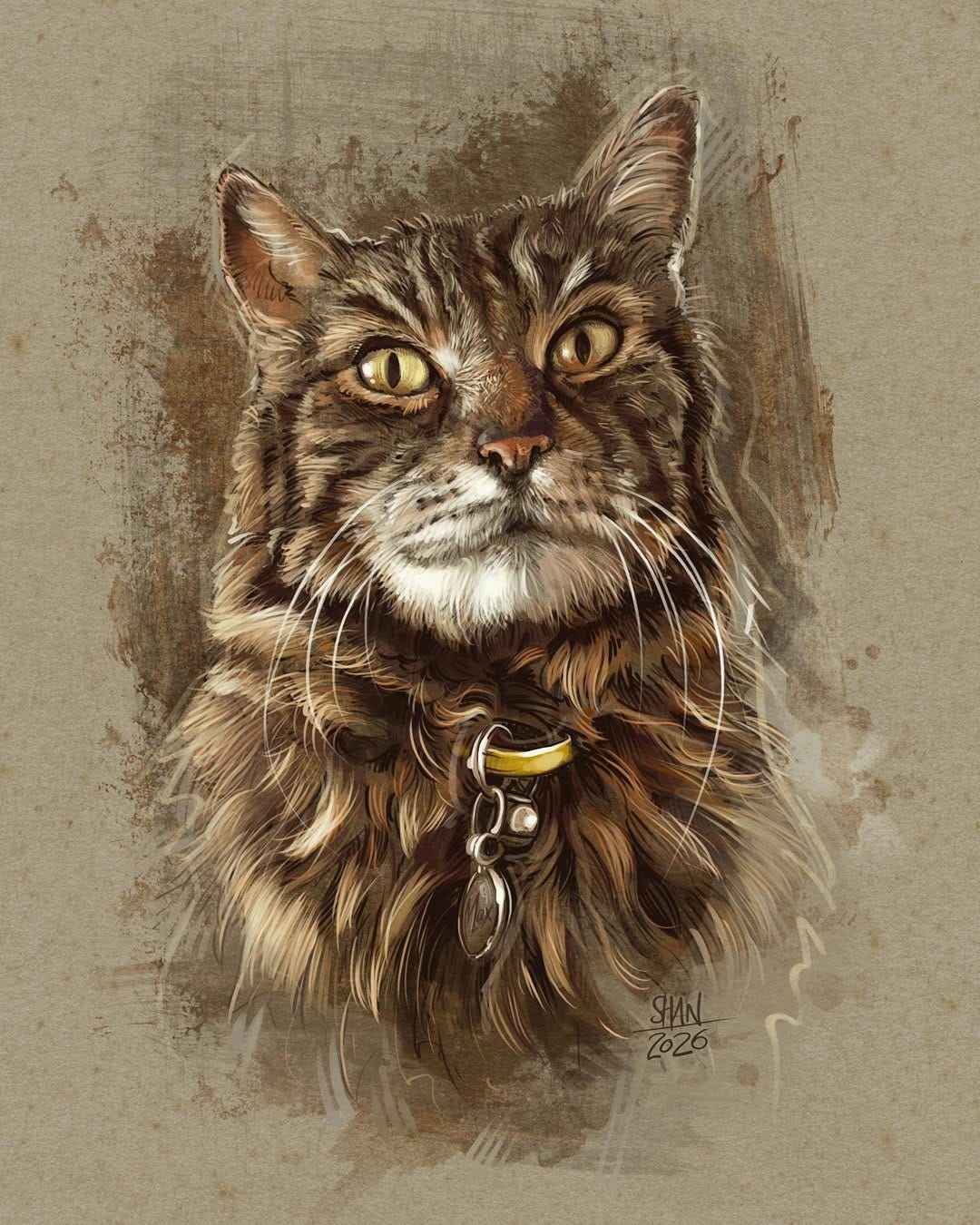
Portrait of Max, painted by our dear friend, artist & musician Shannon Trottman
For Max
The abyss of grief is a chasm so vast that no compass—or map—can chart its depths. When Max died earlier this month—our Maine Coon, our magnificent, irrepressible boy of eighteen years—time itself seemed to suspend, leaving days soft around the edges and ordinary tasks dissolving into emptiness. In grief, hours, dates and calendars lose all meaning, yet the world continues its rigid march, carrying on regardless, almost cruelly, especially during the festive season when joy is expected, and sorrow is quietly sidelined.
Max had walked beside me for nearly a third of my life. Through every tropical chapter, every move, every unfolding change, he was there—observing, purring, talking, omnipresent. A true sentinel. Our guardian of being. His presence was so constant that his absence arrived as a physical shock. The new silence is so loud it deafens us.
As if in quiet apology, time eventually returns, and we are told it heals all wounds. Grief, however, does not heal—it moves, it shifts and comes in waves. Coping with it is a kaleidoscope of knots and kindling scars. The void it creates is multifaceted and knows no remedy but stillness in action. Distraction is futile. Conversation feels pointless. While we may place the past behind us, we cannot bury its bones; they rise again at the faintest whisper of loss, and the well of grief draws deep once more.
Max was not “just a cat.” He ruled the roost wherever he roamed, winning everybody over with his charm, whiskers, hilarity, and quiet wisdom. Outrageously funny and magnificent. Regal and ridiculous. A mighty Maine Coon with the biggest heart and an even bigger presence.
Adopted by best mate Nigel in Mullumbimby, Byron Bay became Max’s true kingdom: sunlit floors, open doors, and the backyard swamp he transformed into his own personal theme park. From life by the beach to his final, forever home on the hill overlooking his new kingdom —breeze, birds, butterflies—he inhabited every place as if it were designed solely for him.
Sadness and sorrow are essential ingredients of compassion. They belong to the wheel of life just as much as happiness, joy and ecstasy. The incomprehensible emptiness left by death—human or animal—is not a failure of resilience. It is the price of deep attachment. Loss is not proportional to species; it is proportional to love.
‘You’ve Got A Friend’ - Max & Normie
From grief to relief
In Chinese medicine, grief is associated with the metal element, the lungs and colon, and the season of autumn. Rather than paraphrase this ancient wisdom, I return to the words of Chinese Medicine Master Paul Pitchford, under whom I certified. He explains that when grief is expressed and resolved, it strengthens the internal basis of health. When repressed, it creates long-term contraction in the lungs, impairing their ability to disperse nutrients and qi. Over time, the lungs become congested.
The forces of Autumn create dryness in Heaven and metal on Earth; they create the lung organ and the skin upon the body … and the nose, and the white color, and the pungent flavor … the emotion grief, and the ability to make a weeping sound. — Inner Classic
Virtually everyone with lung or colon disorders, regardless of origin, carries unresolved sadness that seeks clearing. Understanding the inward, contracting nature of grief offers a vital clue for working with it.
If we accept that the lungs house grief, then the importance of breath becomes unmistakable. Watch how a body responds to loss. A child grieving curls inward, hugging knees to chest, weeping quietly. Adults do the same, though often behind closed doors.

Since Max left earlier this month, I noticed my own body folding in—protecting the chest, guarding the heart and lungs from further rupture. The body remembers. The physical form responds before language arrives. This contractive movement is instinctual: a primal mechanism of self-preservation.
Healing requires its counterpart. Expansion. Release. Letting go. From within to without. Without this rhythm, grief does not pass through us—it lodges. And over time, that stagnation can manifest as illness.
For me, yoga has been a powerful ally. Its long, gentle—or sometimes quietly strengthening—holds invite the body to open where it has been gripping for decades. Practised with the ocean close by, breath syncing with tide and swell, the mat becomes a place of soft return.
The practice is like a heat-pack on my cardiac crack: warming, loosening, coaxing the heart to release and expand when words fail and tears stall. Each slow breath, each sustained posture, feels like permission—to feel fully, to stay with what aches, to make room for grief, and, like the tide itself, to let the love move back in.
Swimming has always been essential. In the ocean or pool, the rhythm of the water, the resistance, the focus on inhaling and exhaling, all work the lungs in a way that is both physical, spiritual and emotional. It feels like sorrow is being drawn out with every stroke, expelled in each long breath.
And now, as the exhaling has unfolded, I am back on the bike— my broken heart rate rising to 150 bpm, muscles alive, blood pumping. In these moments, I feel invincible. Life, grief and joy all racing together, reminding me that even in loss, the body can lead the way back to vitality, presence and exhilaration.
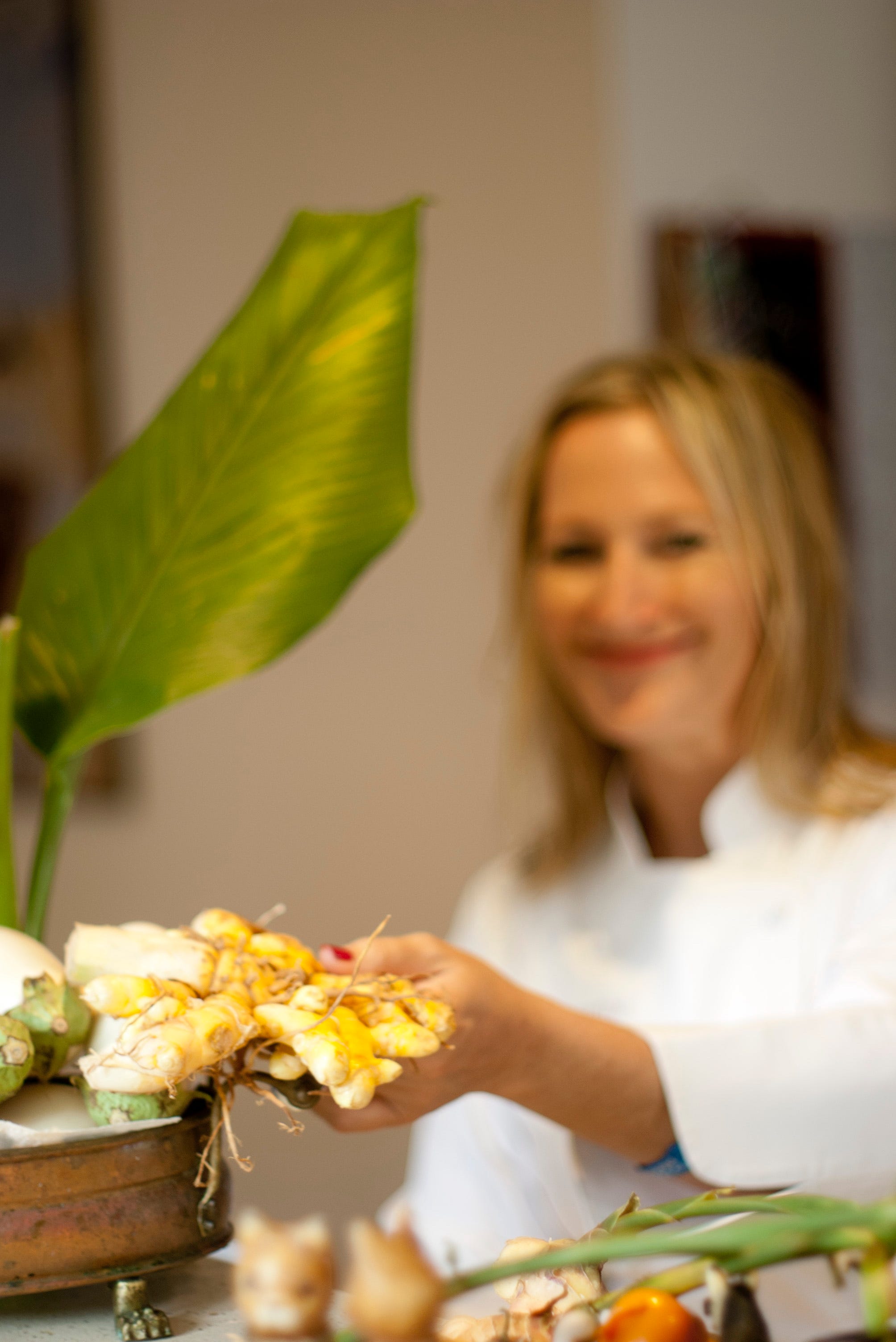
Coping with grief through food
When using food as medicine for grief, we prescribe pungent flavours. Ginger, garlic, onion, cloves, cayenne, cinnamon, cardamom, cumin, thyme, sage, turmeric, wasabi, horseradish, mustard seeds and greens, radishes, black and green peppercorns. These foods are warming, aromatic and robust—the first port of call for the lungs.
Pungency disperses. It moves energy and fluid. Phlegm. Tears. What has been held too tightly.
“The essence of food is received through the sense of smell and appetite is stimulated by the warm fragrance of baked and sautéed food,” writes Pitchford. For periods of deep grief, slow-cooked foods are best.
During my three-month convalescence with pneumonia a long time ago, I lived mostly on boiled peas and mashed potatoes—simple, soft, comforting. Easy to digest. It allowed my gut to rest and my body to heal. Grief asks for the same gentleness. Recently, humble pasta has been my refuge; penne, peas and garlic have offered quiet comfort during times of despair. My dear friend Sarah Swan’s heart-warming congee recipe may also hit the spot.
Healing asks for warmth. Simplicity. Patience.
Max taught us many things in his eighteen years: presence, loyalty, humour and how to inhabit a space fully. Thank you for growing old with us. For trusting us. For staying as long as you could. For the slow blinks, head bumps, sideswipes, sly bites, cat sandwiches pressed gently between loving hearts, and endless tummy rubs.
Now it is time for him to rest—to stretch out somewhere warm and peaceful. We imagine him crossing the rainbow bridge, wings on, our Zen master settling into a higher post to watch over us from afar.
And if grief is love with no living destination, then this overwhelming heartache is simply all of the love we have for Max, with nowhere left to land.
We carry you with us always, our darling Mr Meowzie.
You were—and always will be—so deeply loved.
🐾
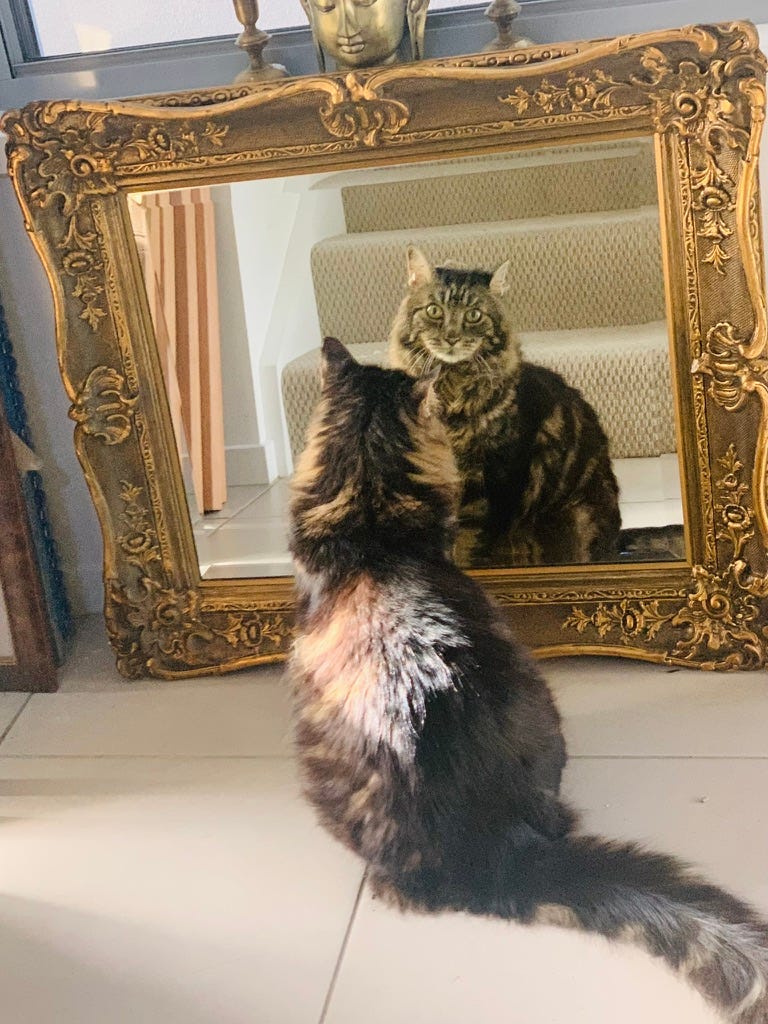
This is an extended tribute to Max. Some words were originally posted on social media. The excerpts about Chinese medicine, food and grief were originally published in part on my blog.
“Loss is not proportional to species; it is proportional to love.” So, so true, Sam. It’s something that should be recognised in every workplace, too. Beautiful piece.